


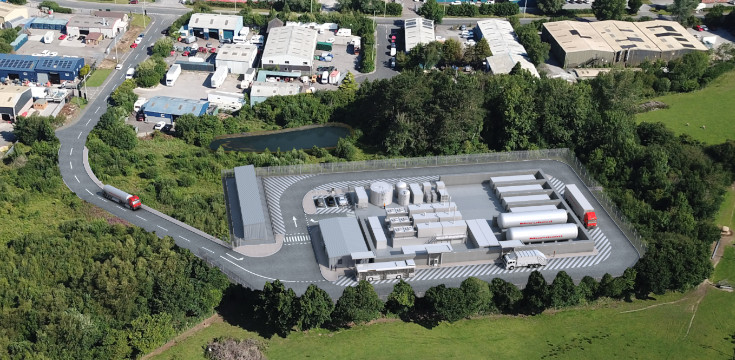
Last week, Bridgend Council’s Planning Committee met to decide the planning application and hazardous substances consent for the Hybont project at Bryncethin and Brynmenyn.
As there’s a lot of interest in this – and it’s going to be one of the most controversial planning applications of the current council term – it’s covered in more detail than usual.
You can move between the different sections by clicking next or by using the drop-down menu.
TL;DR: It was granted permission on both counts; the final decision is up to the Welsh Government – skip to the final section for more.
The entire, almost four hour, meeting is available to watch here.
The accompanying report – all 97 pages of it – is available here (pdf). The key points are:
- The Health & Safety Executive determined that the hydrogen plant does not meet their requirements for statutory consultation. However, the developers “may need to apply for a hazardous substances consent” from BCBC – which has been done.
- The development doesn’t need an Environmental Impact Assessment as planning officers determined that “the likely effects of the development would not be so significant by virtue of the nature, size and location.”
- BCBC’s role as a landowner isn’t a material planning consideration and BCBC has already withdrawn its financial contribution to the project (the cancelled district heat scheme).
- While the hydrogen plant will use energy from the grid “during periods of low renewables generation”, as extra renewable projects in the area come online, the amount of renewable energy supplying the plant will increase.
- Welsh planning policies state that developments “should maximise renewable and low carbon energy generation from all technologies”.
- Additional traffic generated (up to 80 vehicle movements a day) is unlikely to be significant.
- Planning permission for playing fields at the clay pits site (the solar farm) has lapsed and its use as open space has been removed in the current Local Development Plan.
- While earlier noise impact assessments suggest the hydrogen plant would generate “a significant adverse” noise towards nearby residents during nighttime hours, the developer’s mitigation measures and planning conditions should be enough to address this.
- There are lots of regulations concerning hydrogen production. Planning officers believe there is “no evidence….to indicate that the risks to health and safety….cannot be safeguarded through other legislation.”
- There are tree lines surrounding the hydrogen plant that reduce the visual impact.
- Dwr Cymru/Welsh Water believe there is enough capacity in the local water supply to serve the hydrogen plant. They offered no objections.
The overall recommendation of officers was that the committee should approve the application, subject to conditions.


