


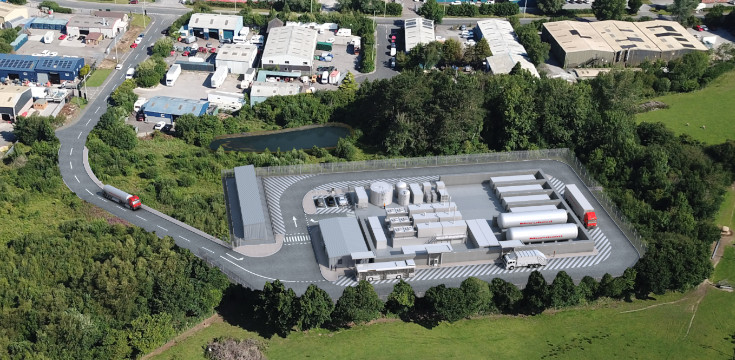
Bridgend Council’s Cabinet is set to authorise work on a land transfer, which would see two sites earmarked for the controversial Hybont project passed to the Cardiff Capital Region (pdf).
The two sites include a proposed solar farm at Bryncethin clay pits and the hydrogen plant itself at Brynmenyn Industrial Estate.
Under the proposal, an independent “red book valuation” of the two sites will be made and a price agreed upon between BCBC and the Cardiff Capital Region. It’s estimated that this is likely to be around the £1million mark if planning permission is secured.
BCBC intends to secure restrictions so that the land can only be used by the Cardiff Capital Region for the Hybont scheme and nothing else. It would also prevent the city region from selling the land on; it’ll have to remain in public ownership.
Any money BCBC receives for the land would be held in account. If, for whatever reason, the Hybont scheme doesn’t go ahead, the city region will transfer the land back to the council at the same price they agreed to buy it for.
So this would be an “options agreement” rather than a straight-up sale.
At what stage is the Hybont project now?
Bridgend Council withdrew their direct involvement last September – which would have seen a district heat system developed for public buildings in the Sarn/Brynmenyn area – over growing costs.
BCBC’s decision to pull out was called in by a council scrutiny committee. Officers said the Hybont scheme – which would carry on with a hydrogen fueling station at Brynmenyn – would likely be taken forward by the Cardiff City Region alone, subject to further talks.
The Welsh Government will ultimately decide whether the project goes ahead after taking the option of “calling in” the planning application.
BCBC’s planning officers still need to make a recommendation on the planning application, but the Welsh Government could choose to override it.
The developers behind the Hybont scheme will also need to secure various operational and safety permits from the Coal Authority, Natural Resources Wales, National Grid, Health & Safety Executive and Dwr Cymru/Welsh Water.


