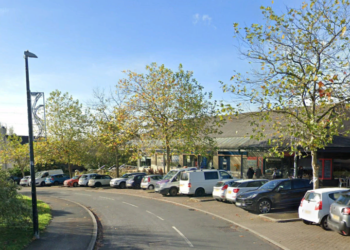
Today marks six months until the next scheduled local government elections in Wales – at both county level and community council level.
With that in mind, here are some of the key factors at play going into that campaign in Bridgend.
Quadruple whammy: Ford, Covid, Climate Change & Brexit
The speed at which things have gone quiet from the Welsh Government, local MSs and MPs over the recovery from the Ford engine plant closure has been depressing. The task force set up by the Welsh Government seemingly hasn’t met since January 2020 and once Ineos pulled out of the new Brocastle factory everything went dead.
Bridgend has subsequently dropped towards the bottom of the Welsh league table for median weekly earnings. Brexit is still causing problems too, particularly concerning staffing in social care.

While Bridgend Council rightly has their critics, there are arguably more positives than negatives when it comes to its response to the Covid-19 pandemic.
Staff deserve credit for keeping things going in difficult circumstances. Elsewhere, the council have effectively been forced to webcast all meetings (having long shown a reluctance to) which improves transparency. The major downsides seem to have been the questionable free school meal replacements the council provided towards the start of the pandemic and the backlog in public works (which is to be expected).
BCBC hasn’t been helped by mixed messages coming from the UK and Welsh governments. It’s created an impression amongst the public that the pandemic’s over when it most certainly isn’t. BCBC has set up a panel to consider their priorities for the pandemic recovery, but we should all hope it doesn’t end up like the Ford task force.
Looming over all of this – as we reach a critical point in history – is the impact of climate change. BCBC has been talking up their decarbonisation plans, but beyond the county’s excellent recycling rate, investment in Porthcawl’s flood defences and the odd token development like electric council vans, outcomes have so far fallen far short of ambitions.

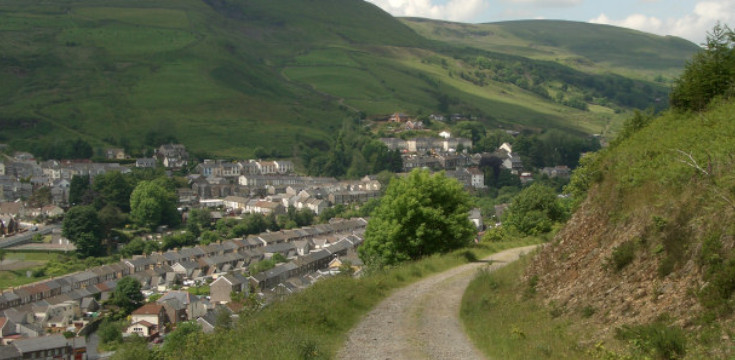
Grand plans for district heat networks and mine water heating systems have either stalled or been scaled back significantly. Elsewhere, the Caerau Arbed scandal may have shaken confidence in government energy efficiency schemes and the infrastructure simply isn’t there yet for a mass switch to low-carbon vehicles.
An ever smaller council
The most noticeable thing that’s happened over the last 5-10 years is the gradual reduction in the number of services provided directly by Bridgend Council. Despite council tax only ever seeming to go up, BCBC is doing less and less in-house.
Cultural services, waste collections and some parts of the care system have effectively been partly or wholly outsourced. Bridgend Council has – with mixed success – sought to pass control over some local assets to town and community councils, while regulatory backroom services are shared with other local authorities.
That doesn’t mean BCBC are not still responsible for a significant proportion of services – the main ones being schools and social services as well as key administrative functions like planning. The problem is it’s becoming more and more difficult to figure out what BCBC are fully responsible for and, subsequently, what individual councillors and the Cabinet are accountable for.
More cuts will come. Library services will probably be towards the front of the queue for cutbacks in the next term. Also, despite stricter home-school transport eligibility criteria being in place for a while now, the service continues to run with a large overspend.
People will be well within their rights to criticise Labour for overseeing this and Labour councillors face a tough task defending their record over the last five years. That said, it’s equally right to question the opposition parties and groups on what they would do differently because there are no easy answers. I hope we’ll have detailed, properly-costed manifestos from all groups and parties standing next May, but we rarely get that.
The need for a town & community council shake-up
See also: State of Wales – How Wales Works: Town & Community Councils – An Overlooked Reform?
While Bridgend’s 20 town and community councils do a lot of good work, that good work has often been overshadowed by a minority of councils that either don’t work properly or have been scandalised by mismanagement. It’s getting to the point where BCBC and the community councils should get around a table and work on a lasting reform in the next term. The “m-word” – “mergers” – ought to be on the cards, as well as boundary reform and probably an overall reduction in the number of community councillors to cut the number of co-options and vacancies.
Bridgend Council increasingly expects community councils to provide more services previously run by BCBC (through community asset transfers and alike). It’s right to demand that Bridgend Council makes sure the organisations and community councils they want to hand responsibilities to can handle them. That’s down to the skills of the clerk, the professionalism of members (i.e. turning up to as many meetings as possible and taking the role seriously) and the ability to make the right decisions using the right procedures independently without getting into arguments and without needing to be babysat.
That’s not necessarily linked to the size of a council, but if a sizable chunk of a community council’s budget goes towards the clerk’s pay and holding meetings where very few decisions are made then the council is probably too small. The worrying thing though is that many of the stories that have emerged – and will continue to emerge – don’t involve the “little councils” but their bigger brothers and sisters that are supposed to be setting an example.
The new Local Development Plan
While LDPs have often proven to be far more controversial in other local authorities, they rarely have been to the same extent in Bridgend. As the LDP will be finalised during an election campaign some of the proposals may end up as election issues.

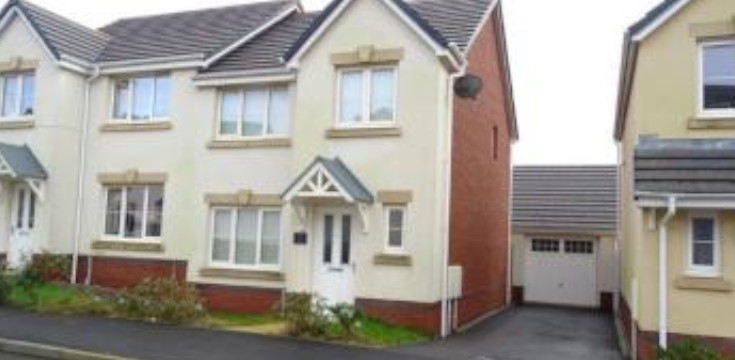
Housing has – once again – proven to be the most keenly-contested aspect, with concerns over the pressure new developments are putting on local services and questions over whether housing targets are an overestimate of local needs. That has to be balanced with the ridiculous growth in house prices in the Bridgend area over the last few years.
Bridgend (town) is running out of developable greenfield sites, so most of the allocated land for development in this LDP has shifted towards Porthcawl, Pyle and Pencoed.
The current LDP is on track to deliver the number of new homes it was projected to, there’s been a marked failure in bringing forward new employment sites and – subsequently – employers. While large numbers of people in Bridgend commute out of the county for work, that surely can’t be sustainable?
Porthcawl regeneration enters a crucial stage
At the risk of a cringy Elvis Festival-related pun, it’s “now or never” for Porthcawl regeneration. The entire thing is cursed. There’ve been so many false starts and false dawns it’s no surprise that Porthcawl residents have increasingly become fed up with Bridgend Council.


There does, at long last, seem to be a bit more drive to make thing happen. A new watersport centre has been delivered and work has started on new coastal flood defences. Hopefully, a BCBC-backed project to replace the failed Maritime Centre will come forward too shortly.
A new Aldi and regeneration driven by housing don’t sound that exciting, to be honest. It’s the easy way out and a missed opportunity, but it’s something at least. I know there’s work by a residents group and architects floating as part of a “placemaking” consultation exercise which includes far more open space, social spaces and outdoor facilities at Salt Lake. What will come of that remains to be seen.
Cut to councillors and boundary changes

The county election will be fought on new ward boundaries (described in more detail here), while there are a few minor changes to one or two community councils as well.
The changes don’t really advantage or disadvantage anyone to any great degree. Labour has the most to lose overall, but some of the new wards may make their task easier than it would’ve otherwise been – largely due to the voting system. I highly doubt Bridgend Council will consider switching to single transferable vote/voting by preference now that they have the power to do.
There’ll be an interesting dynamic – particularly in the new Brackla single-seat wards (where local profile will count hugely) and the new multi-member wards in Pencoed, Garw Valley, Cefn Glas, St Bride’s Minor, Coity Higher and Bridgend Central. More on that closer to the election itself.