(Title Image: © Copyright eswales and licenced for reuse under Creative Commons Licence BY-SA-2.0)
Next week, Bridgend Council’s Cabinet are due to discuss several reports on projects designed to decarbonise the county and improve energy efficiency.
Controversial Arbed scheme to be extended to the Ogmore Valley and parts of Porthcawl (pdf)
The Welsh Government’s Arbed scheme was caught up – through no fault of its own – in the scandal involving shoddy home insulation work in Caerau.
Given the negative outcomes there (the issue hasn’t yet been fully resolved) it seems like bad timing to announce that Arbed will be extended to the Ogmore Valley and eastern Porthcawl.
While cavity wall insulation caused the bulk of problems in Caerau, Arbed includes energy efficiency measures like loft insulation, draft prevention, solar panels and radiator system upgrades.
Homes will be eligible for work worth £5,000-£12,000 each depending on whether they’re on the mains and how poorly their home performs on Energy Performance Certificates (homes graded E, F and G will be eligible).
Unlike the Caerau programme, an external contractor will be appointed by the Welsh Government rather than the council.
Given the lack of transparency arising from the Caerau scandal, the award of those contracts should be done in the open and requires councillors of all political persuasions to pay close attention.
Caerau mine water heat network runs into trouble; alternatives to be considered (pdf)

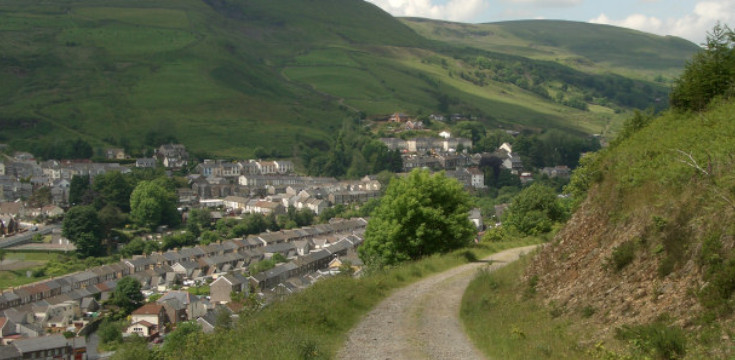
The Caerau scheme is supposed to use water from old mine workings to provide low-cost heating to homes in the village, helping to reduce fuel poverty.
The project was delayed for technical and economic models to be carried out – originally due at the start of 2020.
Since then, the Coal Authority believe the water involved isn’t mine water, requiring further borehole investigations which would cost three times original estimates. As such, it was deemed increasingly less viable to use mine water.
Bridgend Council hasn’t abandoned the idea completely and smaller-scale use of mine water is one of the alternative options put forward in the report.
Other options include a traditional district heat network (similar to Bridgend town centre – below), an alternative geothermal-like system or continuing energy efficiency measures home-by-home. There’s also the option of scrapping the scheme altogether.
An appraisal of the options will be undertaken and another report presented to the council once that’s completed, but for now it’s probably safe to say that the mine water heat project is on its last legs.
Bridgend Town Centre District Heat Network (pdf)

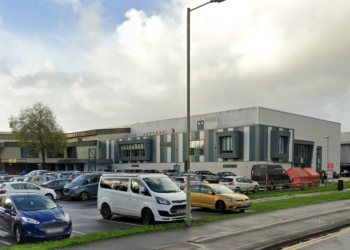
This proposal would see a combined heat and power centre built at Bridgend Life Centre/The Rec, with the system initially supplying the Civic Offices, Life Centre and Indoor Bowls Hall with heat and electricity. My understanding is that it’s supposed to supply the Sunnyside Wellness Village too.
A second phase would expand the project to supply schools, hospitals, at least one care home and new developments in Bridgend town centre.
Work has continued behind the scenes during 2020 but the project has reached what’s described as a “milestone stage” with several big decisions needing to be made before March 2021.
These include selecting a contractor, setting up a Special Purpose Vehicle to deliver the scheme (essentially a council-owned company to isolate financial risks) and securing environmental permits from Natural Resources Wales.
Following an independent review, the project is still deemed to be financially viable because of low interest rates (for borrowing associated with the project). However, the margins remain tight and BCBC may not see a return on their investment for several years.
A planning application for a heat store – which would be located to the rear of the Life Centre – is set to be submitted this month.