This site is best viewed in landscape mode on smartphones.
Support Local News? Support Oggy Bloggy Ogwr
Oggy Bloggy Ogwr doesn’t receive any subsidy and isn’t funded by the BBC. If you like what I’m doing here and think this work is important in keeping locals informed of what’s happening in Bridgend, consider a donation. One-off or monthly; as little or as much as you want. Click the links below, or full details are available here.
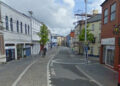
Five Independent councillors representing the Bridgend town area led a “call-in” of a recent decision by Bridgend Council’s Cabinet to approve an 18-month experimental traffic order in Bridgend town centre.
The proposed order would extend unloading/loading times, allow cycling in pedestrianised areas and increase the number of disabled parking spaces on Derwen Road.
You can read the full call-in notice here (pdf). The issue was discussed by the Council’s Communities, Environment & Housing Scrutiny Committee last Friday (3rd October 2025).
Why was the decision called in?
Overall, the decision wasn’t scrutinised properly by the Cabinet.
The proposed measures don’t meaningfully improve access to Bridgend town centre for the public/shoppers. The Cabinet and officers have ignored the majority support in the public consultation for reintroducing one-way traffic to Market Street, Dunraven Place and Queen Street.
Similarly, the Cabinet approved the reintroduction of cycling in pedestrianised areas despite public consultation views being evenly split between support and opposition.
During the Cabinet meeting, reference was made to local and national policies which rule out de-pedestrianisation, but these weren’t explained in any detail.
There’s also a reference to low kerb heights presenting a road safety risk, but the kerbs along Market Street, Dunraven Place and Market Street are the same height or higher than those along Nolton Street between Derwen Road and The Rhiw (which is open to traffic).
Cross-party consensus in favour of a call-in
Cllr. Steven Easterbrook (Ind, Bridgend Central) – who is a town centre trader – told the committee there was increased apathy among traders as they’ve been calling for partial de-pedestrianisation for a decade.
Cllr. Martin Williams (Ind, Coity Higher) asked what material difference the Cabinet believe the order would make? What were they trying to test? He pointed to the “informal” trial of depedestrianisation when the automatic barrier was out of action during the summer, which was in itself deserving of a more formal test.
Cllr. Owain Clatworthy (Reform, Pyle, Kenfig Hill & Cefn Cribwr) asked why the trial was for only 18 months and not a shorter period?
Cllr. Heidi Bennett (Lab, Penyfai) said the call-in had merit as there was a proven need to improve the quality of access to the town centre for people with mobility issues. She asked whether a further exception to the traffic rules (which allows emergency access or access for property owners) could be added to allow blue badge holders to access the town centre?
Safety first
Not everyone on the Committee was convinced.
Cllr. Jonathan Pratt (Con, Newton) was cautious about opening the town centre up to traffic without evidence. It had to be done in a “safe and legitimate way”.
Cllr. Colin Davies (Lab, Bryntirion, Laleston & Merthyr Mawr) echoed the sentiment, as no evidence had been provided in the call-in notice relating to road safety.
Trial needed to test safe levels of additional traffic
Cabinet Member for Regeneration, Economic Development & Housing, Cllr. Neelo Farr (Lab, Porthcawl East Central) told the Committee that many issues were discussed with officers before the report was published.
Cabinet Member for Environment & Climate Change, Cllr. Paul Davies (Lab, Caerau) – who is the Cabinet member responsible for highways – added that the current traffic orders in Bridgend town centre were “complicated” and needed to be brought into a single order.
Both were happy to take the issue back to the Cabinet.
Corporate Director for Communities, Janine Nightingale, reminded members that the role of Cabinet was to make decisions based on professional advice from officers. It was also important to note that what was proposed is an experimental traffic order to help determine what levels of traffic could be safely reintroduced to the town centre by increasing the number of vehicle movements (through extended loading/unloading hours).
Legally, the traffic order has to last for a minimum of 18 months. However, the council would have the power to make changes during that time. That could include adding an exemption to allow blue badge holders to drive into the town centre.
The Corporate Director also revealed some road safety statistics. In the four years before pedestrianisation in 2004, there were 13 collisions and 14 casualties in the town centre. This compares to 3 in last 10 years, all of which happened outside of pedestrianised hours (currently 10 am – 6 pm).
Vote: Should the experimental Bridgend Town Centre traffic order be referred back to the Cabinet?
Refer (8)
Cllr. Heidi Bennett (Lab, Penyfai)
Cllr. Jon-Paul Blundell (Lab, Cefn Glas)
Cllr. Norah Clarke (Ind, Nottage)
Cllr. Owain Clatworthy (Reform, Pyle, Kenfig Hill & Cefn Cribwr)
Cllr. Gary Haines (Lab, Aberkenfig)
Cllr. William Kendall (Lab, Brackla East Central)
Cllr. Martin Williams (Ind, Coity Higher)
Cllr. Tim Wood (Ind, Bridgend Central)
Don't Refer (2)
Cllr. Colin Davies (Lab, Bryntirion, Laleston & Merthyr Mawr)