Bridgend Council’s Cabinet is to consider a new policy to deal with invasive species, particularly plants (pdf).
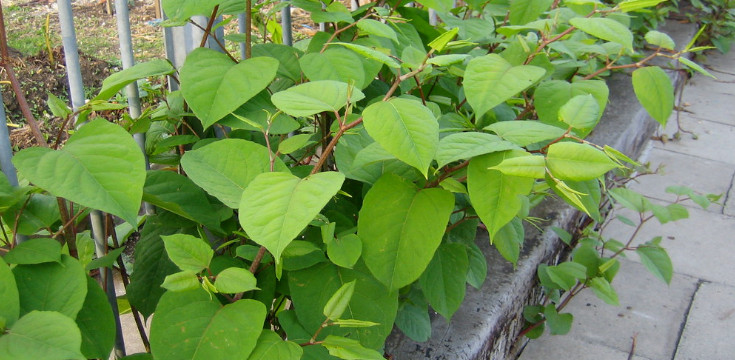
Some of the common invasive plant species present in Bridgend County include Japanese knotweed (pictured) and Himalayan balsam.
Invasive species such as these can put other species at risk, can out-compete native species or spread uncontrollably.
Lack of policy “leaves council open to legal action”
While the report states that BBC undertakes work to deal with invasive species, their inconsistent approach to date has “led to the increased risk of legal challenges”.
In 2018, Maesteg landowners won damages from Network Rail for Japanese knotweed encroachment onto their property.
Earlier this year, Bridgend Council won an appeal at the UK Supreme Court. This overturned a decision in the Court of Appeal in favour of a Nantymoel resident which could have seen landowners seek compensation for the devaluation of property caused by invasive species like Japanese knotweed spreading from neighbouring (including council-owned and managed) land due to a neglect of duty.
BCBC “to eradicate invasive species” wherever possible
The full draft policy is available here (pdf). In summary:
- BCBC will appoint an Invasive Species Officer (this has already happened and they’ve been in post for two years).
- Co-operation with neighbouring local authorities to control and prevent the spread of invasive species across southern Wales.
- Maintaining a list of invasive species – that are present in Wales but not yet established in Bridgend County – that present an environmental or biodiversity risk.
- Develop an action plan and map for each invasive species present in Bridgend. The overall goal is to eradicate all invasive non-native species in the county. A scorecard will be developed to decide which species should be a high priority.
- A new procedure to handle and manage reports of invasive plant species. Enforcement action will also be taken when invasive species encroach onto BCBC-managed land through fly-tipping or neglect.
The preferred methods for removing invasive plants are a mix of chemical and mechanical – though Japanese knotweed is picked out as a difficult plant to control due to how it spreads.