
As some of you might remember, towards the end of September, 38 residents being temporarily housed by Bridgend Council at two hotels in Porthcawl were given a few days’ notice that they had to leave.
It followed a breakdown in a 6-month extension to a temporary housing agreement between the council and the hotel owners.
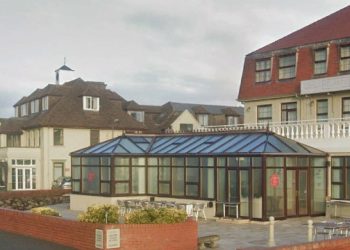

Following last-ditch efforts by the council and third-sector partners, alternative placements were found for all 38 affected people. Despite those efforts, it’s emerged that some of these placements were sub-standard compared to the living conditions the residents had before.
This week, the council’s scrutiny committees discussed the council’s temporary housing policies at length.
There was an updated report, available here (pdf). The key points are:
- Bridgend Council has budgeted just over £4.7million for temporary accommodation, a sizable chunk of which comes from Welsh Government grants. Without the Welsh Government funding, the council would be just over £2million short of where it needs to be.
- The council’s housing service is “under extreme pressure”. There are up to 40 applications for temporary housing every week and in the year to May 2022, there were 1,656 applications representing more than 2,500 people – 656 of whom are children.
- The owners of the two Porthcawl hotels were seemingly the only supplier of temporary accommodation to pull out of the agreed 6-month extension because – to quote the report – they were “unable to meet the requirements of the Council and the arrangement could not be renewed.”
- Of the 38 affected people, 21 were found alternative temporary accommodation (i.e. B&Bs, Brynmenyn Hostel and floor space at the Kerrigan Project on Bridgend Industrial Estate), 6 were found permanent accommodation, 5 made arrangements with family & friends, 5 opted not to take up any offers and 1 person was admitted to hospital.
Providers “held the council over a barrel”
You can watch the meeting here.
Committee Chair, Cllr. Alex Williams (Ind, Pencoed & Penprysg), noted that while the Queen’s death couldn’t have been foreseen – resulting in decisions being made through delegated powers – why was it “left to the wire”?
While the council wasn’t at fault, procurement processes should be reviewed. The last-minute nature would have enabled the providers to “hold the council over a barrel” – which Cllr. Williams found disagreeable given the position it left some of the county’s most vulnerable residents.
Cllr. Amanda Williams (Ind, Coity Higher) asked whether the 21 people who moved to new temporary accommodation were now secure. Would they be rehoused in permanent accommodation at some point?
Cllr. Freya Bletsoe (Ind, Oldcastle) asked about the impact of changes to the law in Wales through the Renting Homes Act.
Cllr. Martin Hughes (Lab, Maesteg East) offered his support to bringing empty properties back into beneficial use. Cllr. Martyn Jones (Lab, Garw Valley) hoped that when families have to relocate to temporary housing there’s a suitable package of support in place.
Right to question last-minute nature; council officers concerned about rising no-fault evictions
Cabinet Member for Wellbeing & Future Generations, Cllr. Rhys Goode (Lab, Nantymoel) extended his thanks to the housing team and senior opposition councillors who took part in rehousing efforts behind the scenes.
While he accepted it was right to question why it was left so late, the providers changed terms and conditions at the last minute when there was an expectation on the council’s part that the 6-month extension would go ahead.
Officers added that providers of temporary accommodation come in and out of the cycle all the time. Regardless, temporary accommodation shouldn’t be seen as a long-term solution.
With over 1,900 people on the housing register/waiting list, demand was massively outstripping the supply of permanent tenancies.
Due to changes coming into force through the Renting Homes Act – which places extra responsibilities on landlords to raise housing standards – there have been concerns about an increase in Section 21 (no-fault) evictions in Bridgend as landlords put their rental properties on the market.
Also, the law changes mean that people in temporary and supported accommodation provided by the council will need to be offered a contract at some point.