


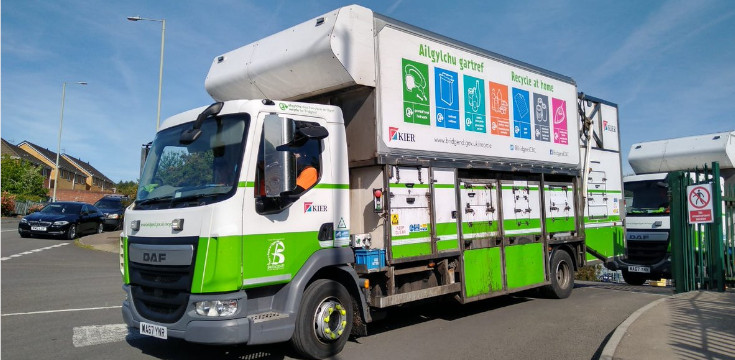
Last Thursday, the Corporate Overview & Scrutiny Committee called in the recent decision by Cabinet to green-light plans for a short-term two-year waste and recycling contract (which you can watch here).
The contract will bridge a gap between the exit of Kier from the waste sector in 2024 and a “longer-term option” from 2026 onwards.


A “call-in” meant the decision was put on temporary hold subject to detailed scrutiny. The Committee will then decide whether to send it back to the Cabinet for a re-think or not.
Reasons for the call-in
The full reasons are outlined in the accompanying report (pdf). These include:
- A lack of detail in the original report meant Cabinet members couldn’t make a fully-informed decision and they collectively failed to challenge some assumptions, particularly around costs.
- No alternative options to the short-term contract and its accompanying plans – such as buying the current recycling fleet from Kier or moving services in-house in 2024 – were presented.
- There was “insufficient scrutiny” of a decision to switch to running the recycling fleet on hydrogenated vegetable oil (HVO) as a temporary measure to cut emissions, which will cost an additional £75,000 per year.
Cllr. Steven Bletsoe (Ind, Bridgend Central) said calling in the decision “shouldn’t be viewed negatively”. He highlighted errors in the existing Kier contract which had to be fixed later on due to a lack of scrutiny of the contract – such as the lack of a sanitary waste/purple bag service.
Cllr. Amanda Williams (Ind, Coity Higher) questioned the two-year length of the contract. This is unlikely to provide enough incentive for a contractor to take it on. She also saw a risk of duplicating procurement processes in quick succession – once in 2024 and again in 2026.
Cllr. Tim Thomas (Ind, St. Bride’s Minor & Ynysawdre) wanted reassurances that contingency plans were in place should the council’s short-term plans fall by the wayside given waste and recycling are becoming less lucrative to private contractors.
Cllr. Ross Penhale-Thomas (Ind, Maesteg West) warned about inflation and the cost of living. He cited massive increases in the cost of providing pedestrian crossings as an example, with tenders often failing to attract any bids. Wouldn’t it be wise to explore all of the options now alongside the short-term contract?
Cllr. Paul Davies (Lab, Caerau) – a former refuse lorry driver – asked for more background on HVO and its supply. Echoing earlier comments, Cllr. Simon Griffiths (Lab, Brackla East & Coychurch) thought a two-year contract was a risk as in most cases waste companies need five years to recover set-up costs.
Short-term contract due to Welsh policy uncertainty; bringing services in-house not practical at the moment
Cabinet Member for Communities, Cllr. John Spanswick (Lab, Brackla West Central), welcomed the additional scrutiny but noted that no final decision was made at Cabinet. It was a decision to seek tenders for the short-term contract while work continues behind the scenes on longer-term options beyond 2026.
He accepted that a short-term contract isn’t ideal, but it was the “best value option” given the uncertainty around public finances and Welsh recycling targets and policies beyond 2026.
In that 2024-2026 period it’s important to keep services roughly as they are now with the same vehicles and same collections. This would free up enough time to procure bespoke vehicles (presumably electric or hydrogen-powered).
£300,000 in reserves has been earmarked for the temporary contract. However, “only a small percentage” of that is likely to be spent as most of the procurement is dealt with out of existing budgets.
On the vegetable oil issue, Chief Executive, Mark Shephard, added that the climate emergency will result in difficult decisions being made to cut emissions. Moving to HVO was “low cost” compared to other options.
Another officer explained that HVO was a more refined fuel-grade version of chip oil, usually made from waste crops. There’s deemed to be an adequate supply, but it was only a “quick fix” to cut emissions; it’s not a long-term option.
Furthermore, it was revealed that companies are interested in taking on a two-year contract. It had to be tendered first to get a picture of the full costs, which are likely to be higher due to inflation. The best-value option would be taken forward.
If, for whatever reason, the contract ends at short notice the council can use emergency powers to ensure the services are maintained (i.e. hiring another contractor without a full procurement process or asking a neighbouring local authority to fill in under mutual aid).
Longer-term options such as bringing services in-house would require far more work and councillors were reminded that Bridgend hasn’t had in-house waste collections since 2003. The necessary staff and infrastructure are no longer in place.
Decision not sent back to Cabinet as Committee “takes ownership” of the issue to ensure proper future scrutiny
Cllr. Amanda Williams tabled a motion that the decision should be referred back to the Cabinet for reconsideration.
Cllr. Martyn Jones (Lab, Garw Valley) emphasised the importance of scrutiny and thought the Cabinet didn’t apply the same level of scrutiny as the Committee.
However, he was willing to back the decision as it stood, tabling a motion where a caveat was included that specialist advice on future waste services is reported back to the Corporate Scrutiny Committee before the Cabinet so that the Committee could “take ownership” of the process.
The Committee subsequently voted 7 to 2 (with 2 abstentions) to back Cllr. Jones’ motion.


