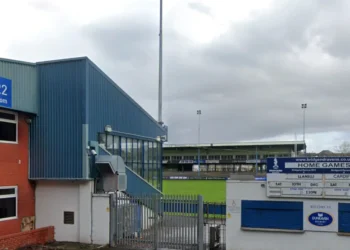
The Adjudication Panel for Wales has handed down a lengthy disqualification to a former town councillor over a breakdown in the working relationship between herself and the Clerk of Bridgend Town Council (pdf).
Cllr. Freya Bletsoe (Ind, Oldcastle) resigned as a town councillor in summer 2024 and remains a county councillor.
Cllr. Bletsoe was accused of breaching the Code of Conduct by: failing to show respect or consideration for others, bullying behaviour and harassment, acting in a way that brings an office into disrepute and making “vexatious, malicious or frivolous” complaints.
A breakdown in relations
The Panel’s investigation focused on six incidents between the Clerk and Cllr. Bletsoe. These incidents took place both virtually and in person between June 2021 and October 2022:
- Cllr. Bletsoe left a meeting “without apology or explanation” after disagreeing with the Clerk about a newsletter’s content (which was documented in the meeting’s minutes). There were no suggestions of anger or shouting during this disagreement, but the Panel concluded there was a lack of respect shown on Cllr. Bletsoe’s part.
- Cllr. Bletsoe was unhappy with how the Clerk managed a Subject Access Request about information held on her since the 2017 local elections. She said she would consider referring it to the Information Commissioner’s Office (ICO). The Clerk had told Cllr. Bletsoe that her request would take three months to complete due to its complexity. Cllr. Bletsoe accepted her ICO “threat” could have made the Clerk feel intimidated or harassed but this wasn’t intentional.
- After a committee meeting, Cllr. Bletsoe claimed that a former Clerk criticised the current one’s handling of it. Staff who overheard the argument were described as being “aghast”. The Panel disagreed with Cllr. Bletsoe’s claim that she was defending the sitting Clerk by informing her of criticism. They considered it to be a form of harassment.
- Cllr. Bletsoe and the Clerk argued over inviting a high-profile guest to unveil a blue plaque, along with budgetary restrictions and information recorded on “pink papers”. Cllr. Bletsoe was recorded as becoming “irate” in the meeting’s minutes (the dispute over which led to her husband’s recent suspension). The Panel found that she treated the Clerk in a “belittling, demanding and high-handed” manner and this was “not the way the public would have expected a councillor to behave in a formal meeting”.
- After the blue plaque meeting, Cllr. Bletsoe demanded an apology and retraction from the Clerk, accusing the Clerk of making vexatious complaints to the Public Services Ombudsman. They both subsequently accused each other of bullying. The Panel found that in the case of Cllr. Bletsoe, this counted as a complaint that had little substance.
- Cllr. Bletsoe, with eyesight issues, suggested to another councillor that the Clerk and Deputy Clerk had not made reasonable adjustments under equality laws for her role (receiving documents in larger fonts; dedicated seat at meetings) despite verbal and written requests. The Panel found that the only written request regarded seating and this was made to the Deputy Clerk. Stating in emails that the Clerk was involved was “incorrect” and “reckless” – but was unlikely to have been done deliberately to “cause a nuisence”.
Cllr. Bletsoe cites health issues for tribunal delays
The Panel concluded that while Cllr. Bletsoe had complied with the original Public Service Ombudsman investigation, she hadn’t fully cooperated with the tribunal. This was deemed to be a significant aggravating factor.
However, Cllr. Bletsoe provided evidence to the Panel that she was in poor health – justifying her delayed response. The report lists several operations and procedures, including a gallbladder removal and invasive biopsies.
A GP and consultant gynaecologist both provided letters suggesting that a lack of accessible mental health support during the Covid-19 pandemic was a possible reason behind her behaviour. Taken all together, the Panel accepted this in principle but didn’t consider it a reason for delaying proceedings.
Councillor handed 21 month disqualification
The Adjudication Panel considered aggravating and mitigating factors before considering their response. The mitigating factors included Cllr. Bletsoe’s ill health and record as a “dedicated and hard-working” councillor who has faced no previous sanction.
However, the Panel found no evidence of provocation or goading (by the Clerk). Other aggravating factors included the number of incidents/pattern of behaviour, Cllr. Bletsoe’s lack of regret, her failure to heed previous advice from the Public Services Ombudsman and the absence of an apology to the Clerk.
The tribunal handed Cllr. Bletsoe a disqualification from being a town councillor for 21 months. The Adjudication Panel decided it wouldn’t be appropriate to extend the ban to the county council as there was no evidence that she wasn’t fulfilling that role properly.
As Cllr. Bletsoe has already resigned from Bridgend Town Council, the disqualification would only prevent her from standing in a by-election. The only course of appeal is to the High Court.