A few weeks ago, a report was published outlining future ways of working for Bridgend Council staff (Distant working could become the norm for Bridgend council staff).
Changes to working practices during the pandemic – such as increased working from home and distant attendance at meetings – are generally believed to have had a positive impact, so much so that some measures may become permanent.
Towards the end of last week, members of a Bridgend Council scrutiny committee had a chance to question the proposals (video here).
Cllr. Amanda Williams (Ind, Coity) raised the issue of digital exclusion and IT literacy – particularly amongst certain groups like the elderly – who may be left out by the move towards more services being delivered online.
Chief Executive, Mark Shephard, said there is a commitment to ensuring face-to-face services will be available for those who don’t want to or can’t access services online.
The major difference is that the council will move to an appointments-only system for face-to-face services – initially at the Civic Offices in Bridgend, but eventually being available more locally (such as in libraries).
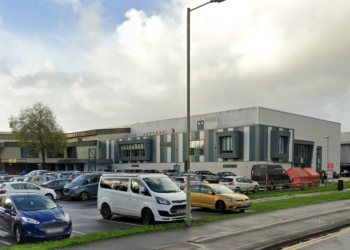
The Chief Executive also expanded on the possible future of Ravens Court (which BCBC have unsuccessfully attempted to sell in the past).
While it’s currently being used as a vaccination centre by Cwm Taf Morgannwg health board, he envisages the entire building (or parts of it) being sold off/rented out or it becoming a shared public or public-private sector workspace. Early talks have taken place with the health board, South Wales Police and housing associations.
There’s a commitment to keeping the Civic Offices as a “visible democratic base”, even if more council staff work remotely.
Two-tier workforce?
Cllr. John Spanswick (Lab, Brackla) was concerned that the new working model would unintentionally result in a two-tier workforce. Those working on the frontlines can’t take advantage of flexible working benefits. It also raises the risk of health and safety claims if staff aren’t provided with “proper equipment” when working from home.
Cllr. Spanswick also suggested that in-person meetings could resume amongst councillors as a sign that “normality can resume”.
Members were told that pilots have taken place for hybrid council meetings – where some people meet in person and others remain at home. At the moment the council chamber can’t be used due to technological problems, while the committee rooms are too small to accommodate more than 9 people under Covid regulations. Another pilot committee meeting is due to take place in November.
Call for full council meetings to be “more meaningful”
Cllr. Martyn Jones (Lab, Bettws) thought the public would expect a bigger focus on what the council are good at and not so good at in the present. The number of member referrals has increased significantly and that hints at increased dissatisfaction.
In response, the Chief Executive said there was “a perfect storm” of the pandemic, recruitment problems and pressure to get work done before next May’s election which meant the council couldn’t respond as quickly as usual.
Cllr. Tim Thomas (Propel, Ynysawdre) thought the new working model was an opportunity to look at streamlining council meetings.
It was revealed that the council’s political group leaders have called for full council meetings to be “more meaningful”; a review of the constitution is ongoing. The new model could enable councillors to choose between attending a meeting in person or remotely – but the infrastructure isn’t in place yet.