This site is best viewed in landscape mode on smartphones.
Support Local News? Support Oggy Bloggy Ogwr
Oggy Bloggy Ogwr doesn’t receive any subsidy and isn’t funded by the BBC. If you like what I’m doing here and think this work is important in keeping locals informed of what’s happening in Bridgend, consider a donation. One-off or monthly; as little or as much as you want. Click the links below, or full details are available here.
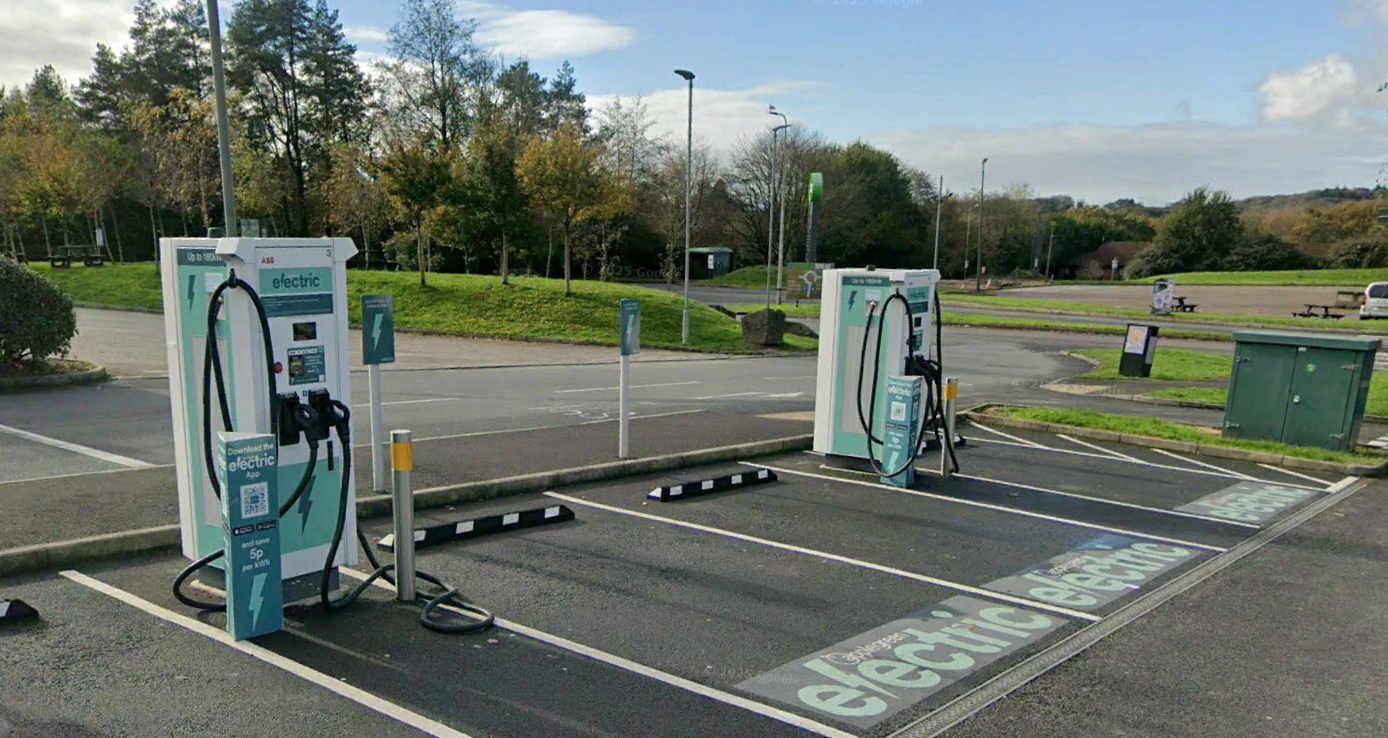
Later today, Bridgend Council’s Communities, Environment & Housing Committee will discuss the findings of a public consultation on BCBC’s electric vehicle (EV) charging strategy (pdf).
A draft EV strategy was published in July 2025. The expectation is that the majority of registered vehicles in the county will be electric by the mid-to-late 2030s, and up to 230 public chargers will be needed by 2030 to meet demand.
According to the report, there are currently 2,900 electric vehicles registered in the county.
Low response rate; on-street EV charging popular option
Only 89 people took part in the consultation (pdf), which makes it difficult to tell if the views are a proper cross-section of the public.
In summary, the findings are:
Most respondents (69.7%) support the council’s aims to install an “accessible and affordable” EV charging network by 2030. 14.6% strongly opposed.
The most popular locations for EV charging points are on-street in residential areas (64.8%), local car parks (58%) and supermarkets (56.8%). There was less support for chargers at parks and beaches (37.5%) and transport interchanges, such as railway stations (30.7%).
82% believe it’s important to make sure EV charging is available in places with lower access to off-street parking (i.e. flats).
70.8% support having a mix of charging options (slow, fast, rapid).
Lamppost chargers are the most popular technology option (75.6%), followed by charging hubs (59.8%) and bollard chargers (58.5%).
A majority (64%) wouldn’t object to BCBC partnering with private providers to install and maintain EV chargers.
A clear majority (68.6%) would be either very likely or quite likely to switch to an electric vehicle if more public chargers were available; 18% were not at all likely.