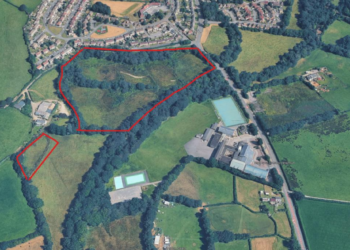
Last week, an official flood report (called a “Section 19 report”) was discussed at July’s Cabinet meeting concerning flooding in September 2024.
As noted, another flood happened in June 2025. As well as affecting the Llynfi Valley and Aberkenfig areas, the two communities covered in the September 2024 report were hit again: the Caer Castell apartments in Brackla and the area around the Nant Cefn Glas in the Oaklands Road area to the west of Bridgend town centre.
A separate Section 19 report is being prepared for the June 2025 flooding. Based on the time it took for the September 2024 report to be published, it may not be ready until the first quarter of 2026.
In response to the September 2024 floods, £125,000 in Welsh Government funding has been secured by Bridgend Council to go towards flood prevention projects at Caer Castell and Nant Cefn Glas. £20,000 will go towards a flood bund at Caer Castell, with the remainder of the funding used to come up with a long-term solution at Nant Cefn Glas.
After being provided more information from affected residents, it was worth returning to in more detail.
Nant Cefn Glas: Residents want short-term solutions in place before “storm season”

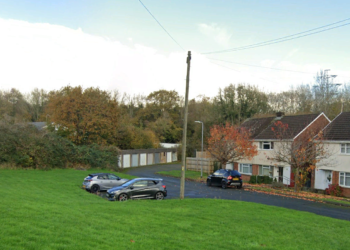
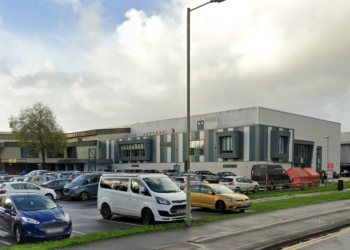
The images above are from video clips provided by Anthony Davies, who lives in the area affected by the flooding of Nant Cefn Glas. This appears to have started at the Greenfields Avenue/Heol-y-Bardd culvert.
On each occasion the stream has flooded, up to 18 inches of flood water has run through the ground floors of affected homes, causing damage estimated to be worth tens of thousands of pounds. The June 2025 flood happened as many residents were still clearing up from the floods in the previous September.
BCBC drainage teams were deployed after floods to identify affected properties, survey the culverts and deliver sandbags.
However, while residents were assured the council were seeking solutions, they were told it would take time and little has been done to protect properties in the meantime. The survey and planning for a permanent solution will take months, and the work itself may not be completed for several years.
Having watched the recent Cabinet meeting, Mr Davies felt Bridgend Council were not treating this with the urgency it deserved.
“The lack of immediate action by BCBC is poor and offers no confidence that the flooding won’t continue to happen. The residents of the area live in fear of any heavy rainfall, especially surrounding weather warnings and are sadly fully expecting to flood again as we head into the autumn and winter if BCBC don’t do something now.”
– Anthony Davies
While a meeting with the council for affected residents in Brackla has been scheduled for later this month, Mr Davies says that no such meeting has been arranged (yet) for residents living alongside the Nant Cefn Glas.
Caer Castell: Network Rail deflects responsibility; residents “left in financial limbo” by BCBC and property managers
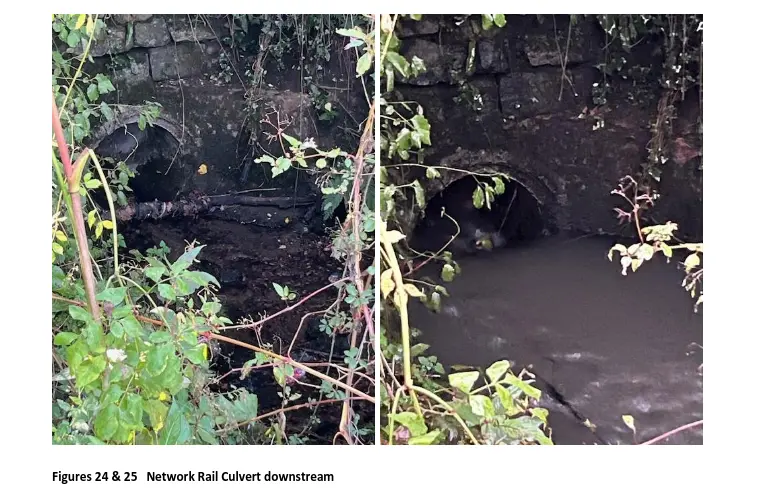
Most of the stories around this published elsewhere in the press have focused on Caer Castell in Brackla. The apartments – built next to the Nant Pontsanau – have been flooded at least three times since 2012. Residents were due to return following the September 2024 flood, only to be hit again by flooding in June.
A source has said that an independent engineer concluded the culvert under the South Wales mainline (pictured above) isn’t fit for purpose because it’s too narrow.
Despite this, Network Rail won’t undertake any work to increase the size of the culvert. They justify this because the culvert isn’t blocked. Also, they don’t believe they have responsibility for increased natural surface water/drainage caused by developments on adjacent land.
In short, Network Rail can act as though Caer Castell/Longacres was never built (in terms of drainage).
Residents believe excessive building in and around Nant Pontsanau, sanctioned by Bridgend Council without proper drainage strategies in place, has contributed to flooding.
While £20,000 has been committed towards providing a flood bund, Caer Castell residents aren’t convinced this will work due to how the water rises and floods the ground floor. No analysis/evidence has been provided (yet) as to how a flood bund would protect the building.
Residents now believe the affected apartments are uninhabitable, unsellable and uninsurable.
In both cases, the situation around financial support is also uncertain. At Caer Castell, the property management company, Lambert Smith Hampton, continues to levy a full service charge and ground rent. Residents are unclear as to whether BCBC will continue to offer a full exemption on council tax or charge double to recoup losses if/when residents can return to their homes.
Residents want a full engineering assessment from Network Rail and BCBC that includes culvert capacity. They also want an independent investigation into the planning and infrastructure decisions that may have contributed to the flooding.
Comment: Better communication is key
You can point to similar cases like this across Wales. It underlines how public authorities under-estimate extreme weather at the most local level – and this kind of thing is going to happen more often. “Unprescedented rain” is no longer unprescedented.
In the Council’s defence, they don’t control the weather and won’t always know where a flood will happen and when – especially at smaller streams. Delivering the permanent fixes for issues like these does take time and it needs proper resources and planning to deal with it. There’s nothing wrong with asking for patience on the long-term fix, but that shouldn’t be at the expense of a short-term solution.
That said, Network Rail and BCBC need to reflect on how poorly this has been handled; doing the legal minimum (or nothing at all in the case of Network Rail) isn’t something to pat themselves on the back for.
One of the more disappointing aspects of this is that when affected residents have asked for information – whether from councillors, more senior elected representatives or staff – nobody seems to know anything. Anyone can offer sympathy, but answers and solutions are better.
Nobody can criticise residents living with this level of uncertainty for being angry. Especially so when the authorities point fingers at each other over who’s responsibility is what and nobody seems to be able to give a straight answer.
The information around financial assistance available to households in Wales affected by flooding is also unclear. Wales doesn’t appear to have an equivalent of the “Property Flood Resilience Grant” in England, and funding is seemingly only distributed on a case-by-case basis after an event.
The National Infrastructure Commission for Wales has recommended introducing a grant scheme for homeowners to pay for work to ensure their properties better withstand floods, and also to provide better training to councillors around flood resilience.
The overall sense that I get – from this and stories/comments published elsewhere – is that the affected residents want better two-way communication with Bridgend Council as the lead flood authority.
There have been visits and meetings held and arranged, but (if it’s not already being done) it may be a good idea for there to be a dedicated officer/point of contact to take the lead on this – and serious flooding incidents elsewhere in the county – and be available as and when affected residents want or need to be updated.